The personalisation form sometimes gives people pause. You worry about spelling the name wrong, choosing the “wrong” pattern, asking for too much. Here's what I see working best, order after order.
The name, exactly as it's said out loud
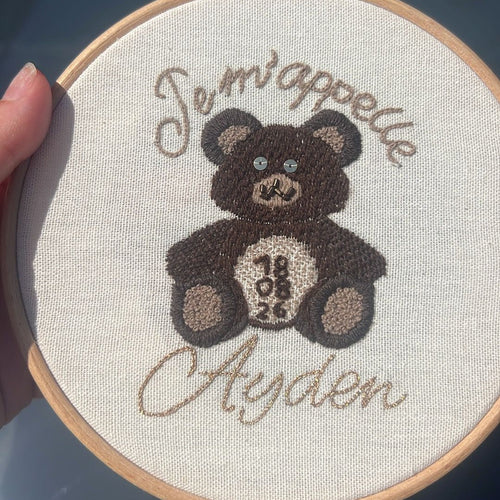
Write it exactly as it should appear: Camille, Léa, Noé, Anne-Sophie. If the family uses a nickname day to day, ask yourself which one will still ring true in five years. The full name often ages better on a wall.
Accents matter. I embroider what you write, not a “corrected” version.
One pattern, not ten
Three families almost always cover it:
- Floral: flowers, foliage, sometimes a sprig of lavender or mimosa, in the spirit of the studio.
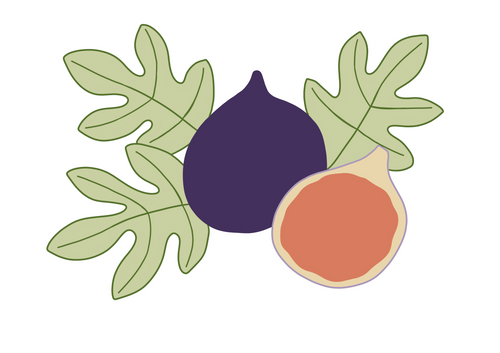
- Fruity: lemon, fig, a small appetising composition, very Provençal without being childish.
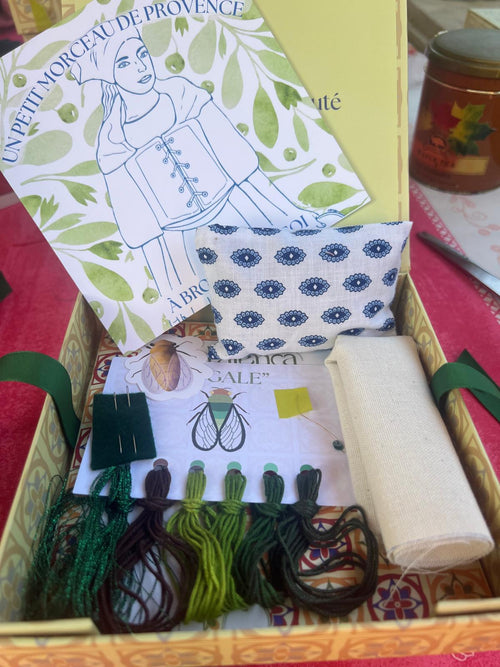
- Animal: rarer, very personal: a bird, a cicada, a motif the family already loves.
If you're unsure, choose floral and note a dominant colour in the details. I'll take care of the composition.
Colours: less is more
Two or three shades, not a rainbow. You can match the crib linen, the invitation, or simply write “terracotta, yellow and sage green”. If you have no idea, leave the field almost blank and attach a photo of the room: I'll take my cue from that.
Should you add the date?
Only if it's already known, or if you're ordering after the birth. A date that's still uncertain and rushed doesn't embroider well. The name alone already makes a lovely gift.
You can also slip in a note for the parents in the details (not to be embroidered, just for me).
Which technique to choose
- Cotton, from €50 → clean, bright, the most versatile.
- Wool, €55 → more volume, a soft, slightly wintry look.
- Silk, €60 → satiny, catches the light more preciously.
- Lunéville, €70 → beads and sequins, the most festive.
For a classic birth gift, cotton or silk work very well. Lunéville is beautiful if you want something more precious, like a christening or godmother's gift.
Fill in the form and order: 2 to 3 weeks of studio time.