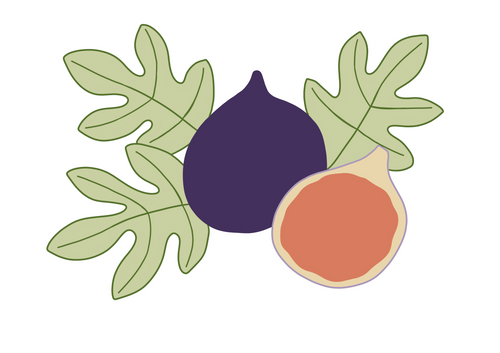
A leaf drawing, a cut fig, a few stitches around a stem: you can keep the same design and give it a different presence by changing the thread.
In the studio, the figs were an opportunity to explore wool embroidery, with Saint-Pierre threads by J. Toulemonde and Appleton. The design, created by my sister, made it possible to work on several surfaces: fruit, leaves and small details. This project raises an interesting question: what needs adapting when you move from cotton to wool?
The material is part of the design
We often choose a thread for its colour. Yet its texture matters just as much. Stranded cotton and embroidery wool don't have the same presence on the fabric: the look of the thread, its thickness and the way it catches the light all influence the result.
The comparison depends on the specific threads used. Not all wools are the same thickness, and not all cottons look like classic stranded cotton. To explore these differences, it is better to compare two specific threads rather than trying to set the materials against each other in general.
Look at them up close, then hold the work at a distance. Is the change most visible in the outlines, the fillings or the raised areas?
Crewelwork, a way to discover wool
Crewelwork is a form of surface embroidery worked with embroidery wool. Leaves, flowers and plant compositions play an important part in it, with a wide variety of stitches and textures.
You can take inspiration from it without reproducing a historical composition. A single leaf or a small fruit is enough to start exploring the possibilities of this material.
The most interesting approach is to choose a design simple enough that you can observe the thread. If you are discovering a new material, ten new stitches and a very detailed design all at once, you will find it harder to understand what suits you.
Keep your stitches, rethink your habits
Changing thread doesn't mean starting from scratch. You can try a stem stitch, a chain stitch or small filling stitches you already know.
However, don't automatically carry over the instructions for six-stranded cotton. Check how your wool should be used: some threads are worked as they are, and their construction doesn't lend itself to the usual separating of strands.
Prepare a small sample. If the thread gets damaged as the needle passes through or becomes hard to pull, check the eye of the needle, the length of thread and its compatibility with the fabric before carrying on.
Choosing a first composition
A leaf with a central vein is a good subject for comparison. Embroider one version in cotton, then another with your embroidery wool, on a suitable fabric.
Keep the same design and the same stitch to begin with. Then note what you would like to adjust: the spacing of the stitches, their length, the outline or the amount of fabric left showing.
You can make a third attempt by changing just one of these parameters. It's a simple way to understand why you prefer one version, without changing too many things at once.
Think about how the piece will be used
An embroidery meant to hang on the wall and a motif on a garment that is washed regularly don't have the same constraints. Before you start, check the care instructions for your thread and your fabric.
To discover a new wool, a small decorative piece lets you focus on the stitches. Keep the references of the threads used with your sample: they will be useful if you want to pick the project up again or top up a colour.
You don't have to choose once and for all between cotton and wool. Trying things out is precisely how you discover which material makes you want to keep going.
For a concrete project, have a look at the embroidered figs tutorial and its downloadable pattern. It will introduce you to the design, the steps and the threads used in the studio.